
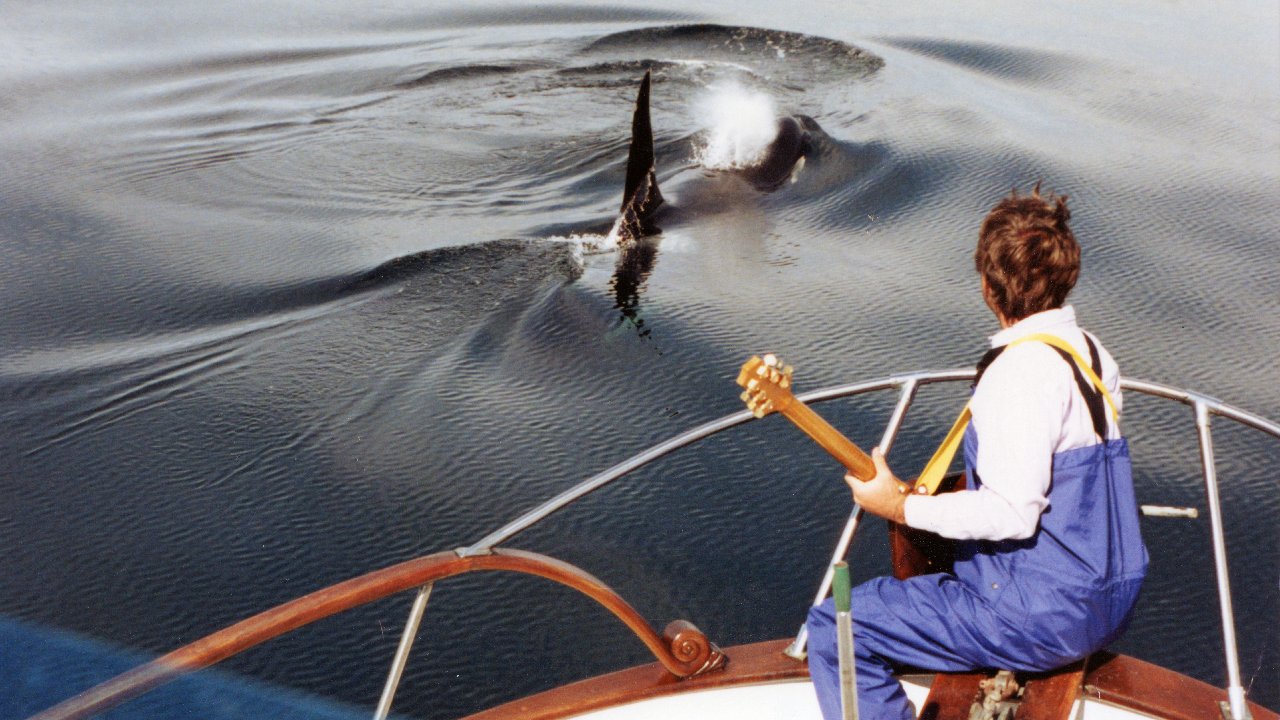
Jim Nollman with his wild Orca friends
From Green-House to Joey Santore (Crime Pays But Botany Doesn’t) to a multi-hyphenate drag-mime-bee we’ve had such an incredible year of seasonal collaborations with our friends of Nonhuman Teachers. To close it out, we’re supporting their end of the year gathering and holiday party with solar-powered sound featuring an all time inspiration… the legendary Jim Nollman with the brilliant Melanie Challenger. If you’ve dreamed of an end of the year party surrounded by landscape designers, cacti friends, fungal fiends, music nerds, while wandering a labyrinth of plants you’ll likely never see anywhere else… this is the place. Let’s talk about interspecies communication.
Donation-based but please rsvp as space is limited.
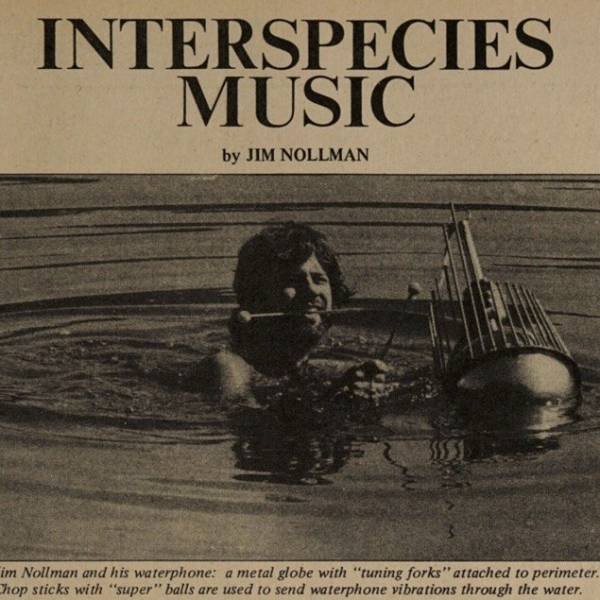
“Jim Nollman never felt that he had any great talent as a guitar player or singer. Attracting the menagerie of animals that he played music with over his decades-long career as an avant-garde sound artist, naturalist, author, and lifelong innovator in the practice of interspecies communication didn’t require that mastery—though he admits to being accomplished on the mandolin. The important thing for Nollman is that, for years, he was the only one doing it.
Nollman’s music innovatively synthesizes countercultural environmentalism and avant-garde art, placing him firmly in the traditions of boundary-breaking artists like John Cage or Marcel Duchamp while also celebrating the influence of conservationists like John Muir and Jacques Cousteau. Two records of his expansive musical interactions are part of the Smithsonian Folkways catalog.
From 1979 to 2014, Nollman’s nonprofit organization, Interspecies Communication, was a locus of community-building and countercultural activity. During that time, Nollman, his wife Katy, and a shifting group of fellow artists, musicians, Tibetan lamas, children, and everyday people created art with the environment, engaged in eco-protests, and used interspecies music-making to help different animals survive. The organization’s website, interspecies.com, is an archive of Nollman’s extensive writing, activism, and music.”
—Smithsonian Folklife Magazine
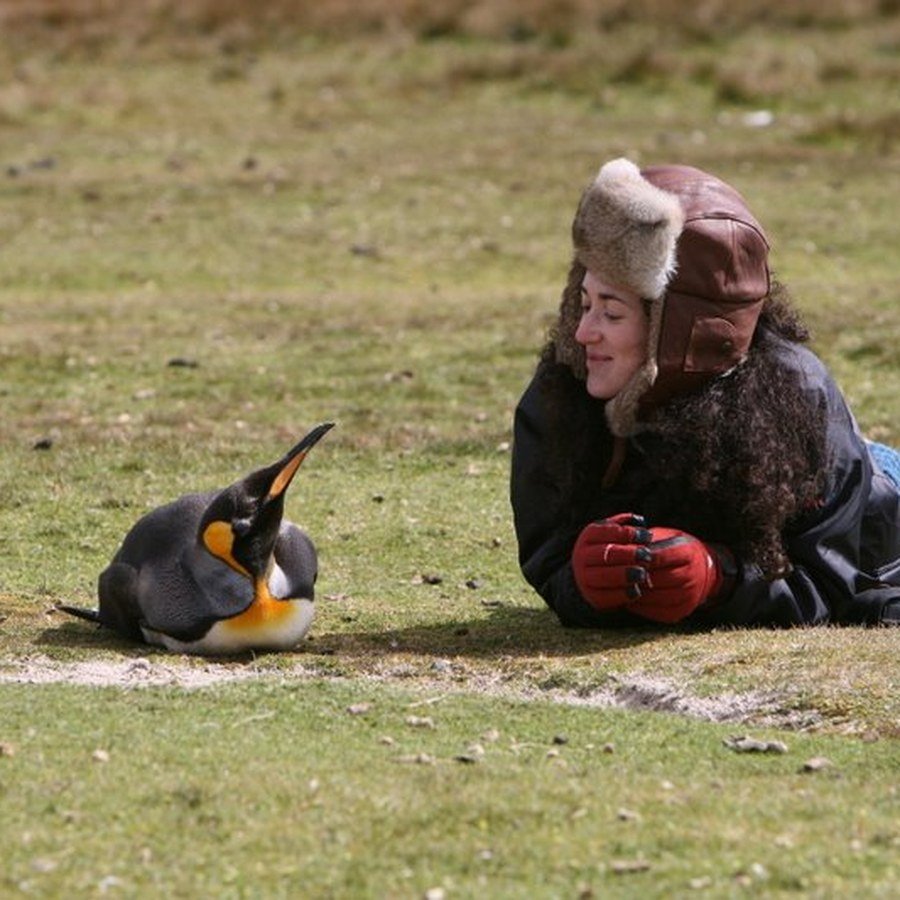
Melanie Challenger began her career in the creative arts, working in classical music and literature. In 2007, she shifted her focus to intellectual history and humanity’s relationship with nature. That year, she received a Darwin Now Award for her research in the Canadian Arctic, followed by an International Fellowship with the British Antarctic Survey for her work on the history of whaling. This research led to her first general trade nonfiction book, "On Extinction: How We Became Estranged from Nature," published in 2011.
Since then, her research has focused on history of ideas, and history and philosophy of science. She has been a visiting scholar at numerous universities and active in bioethics since 2019. Today, she is deputy co-chair of the U.K.’s Nuffield Council on Bioethics. In 2021, she published "How to Be Animal: What it means to be human," and in 2023, she edited "Animal Dignity: Philosophical Reflections on Non-human Existence," with a foreword by Dame Jane Goodall.
She is the vice president of the RSPCA and co-founder and director of Animals in the Room, a nonprofit and research entity that designs models for including the interests and intelligence of non-human life in policy and governance. Challenger writes regularly for a range of publications, has participated in documentaries and films for BBC, CBC, Arte, ZDF, Netflix and others, and hosts the not-for-profit podcast "The Psychosphere" on agency and intelligence in nature. Challenger also continues to work in creative fields, as an award-winning poet and librettist.
Named after an ancient Byzantine Greek manual of botanical wisdom, GEOPONIKA embodies Nonhuman Teachers’ core philosophy: to make gardens that are not just inert backdrops in our lives, but important characters in our story.
Tucked away in a converted truck-loading bay in Los Angeles’ Glassell Park, Geoponika is an experimental greenhouse and landscape design studio founded by the duo behind the pioneering plant collective Cactus Store.
Spanning 2,000 square feet, the space, affectionately referred to as a “plant orphanage”, houses an extraordinary collection of more than 10,000 plants. Over the past 15 years, Morera and Martin have inherited collections from aging growers and institutions undergoing generational change, dedicating themselves to preserving and cultivating these specimens. The collection functions as a living archive that represents an ongoing commitment to botanical preservation and education.
The greenhouse itself is a testament to urban transformation, showing how a former industrial site can be repurposed into a thriving ecological enclave. At first glance, the collection seems wild and unstructured with a breathtaking abundance of plants stacked in a dense, organic tapestry.